








Introduction
The way people search online is evolving rapidly, and voice search is at the center of this transformation. With the rise of smart speakers, mobile assistants, and AI-driven devices, more users are turning to voice commands instead of typing queries. This shift is reshaping the world of SEO and digital marketing. Businesses that adapt to voice search optimization now will have a significant advantage in reaching their target audience.
Growth of Voice Search
The popularity of voice-enabled devices like Alexa, Siri, and Google Assistant has made voice search a mainstream habit. Users prefer voice commands because they are faster, more convenient, and hands-free. Studies show that a large portion of searches in 2025 are voice-based, especially for local queries such as finding nearby restaurants, stores, or services.
Conversational Keywords and Natural Language
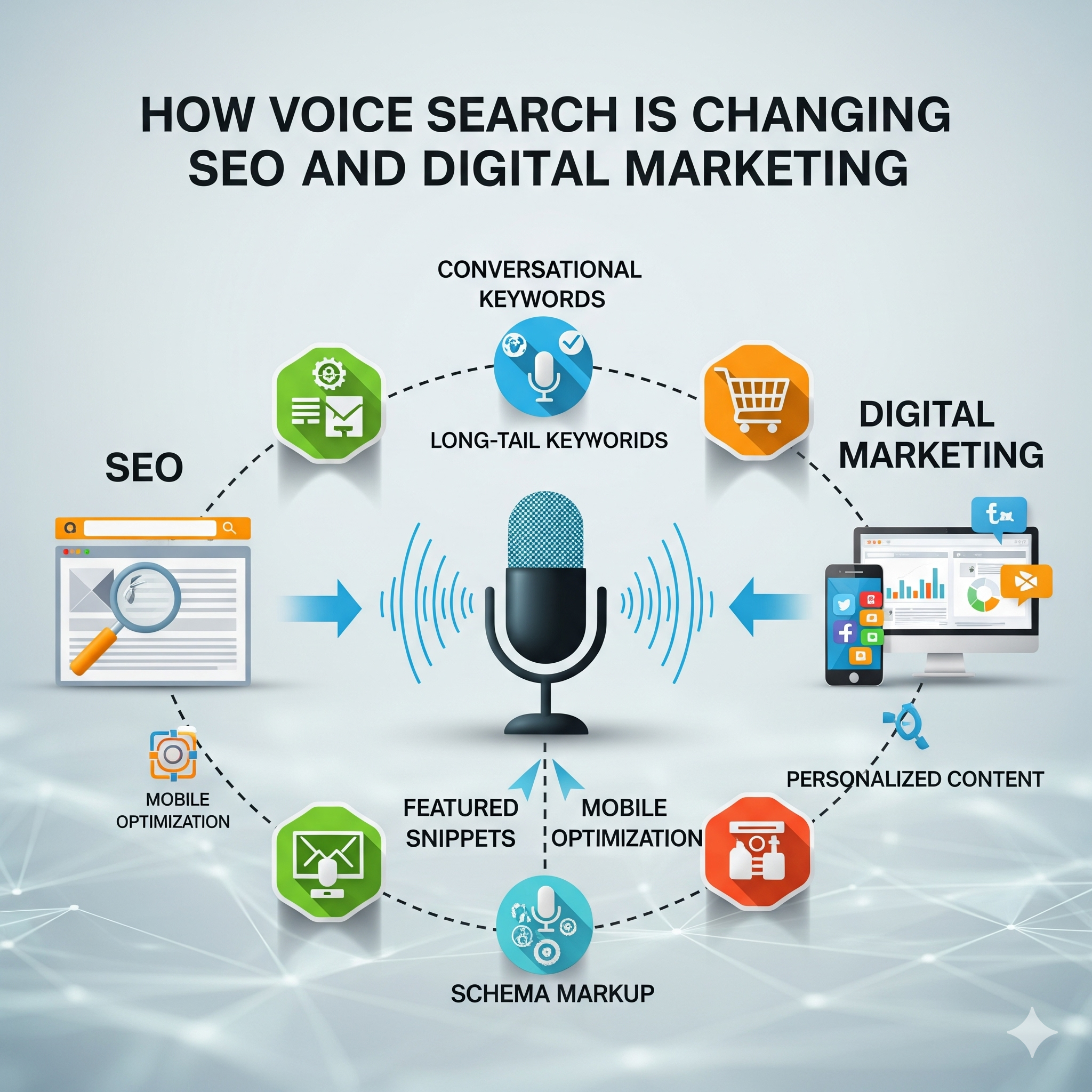
One of the biggest changes voice search brings to SEO is the emphasis on conversational keywords. Unlike traditional text searches, voice queries are longer and more natural, often framed as questions. For example, instead of typing “best coffee shop near me,” a user might ask, “What is the best coffee shop near me right now?” This means businesses must optimize their content with natural language phrases and FAQs to match how people speak.
Impact on Local SEO
Voice search heavily influences local SEO strategies. Many users rely on voice commands to find nearby businesses, making local optimization essential. Ensuring that business listings are accurate, websites are mobile-friendly, and content includes location-based keywords helps brands capture voice search traffic. For small and medium businesses, this presents a huge opportunity to connect with local customers.
Mobile Optimization and Speed
Since most voice searches are conducted on mobile devices, mobile optimization has become a key ranking factor. Websites must load quickly, be easy to navigate, and provide clear answers to voice queries. Google prioritizes fast, mobile-friendly sites, so businesses investing in performance improvements will rank higher in voice search results.
Smarter Digital Marketing Strategies
Voice search is also influencing digital marketing campaigns. Marketers are shifting their focus toward content that answers questions directly, such as blog posts, how-to guides, and video snippets. Paid advertising is adapting as well, with brands creating voice-based ads and experiences tailored to smart devices. Personalization powered by AI ensures that voice search results align closely with user intent.
Final Thoughts
Voice search is not just a trend—it is shaping the future of SEO and digital marketing. By embracing conversational keywords, optimizing for mobile and local queries, and creating content that provides direct answers, businesses can thrive in this new era. The brands that adapt early to voice search will enjoy higher visibility, stronger engagement, and lasting customer trust in 2025 and beyond.


