







Introduction
Artificial Intelligence (AI) is transforming industries by offering smarter automation, predictive insights, and advanced analytics. However, with these advancements come new cybersecurity challenges. As businesses adopt AI to strengthen their digital operations, cybercriminals are also leveraging the same technology to launch more sophisticated attacks. Understanding the top cybersecurity challenges in the age of AI is crucial for building safer and more resilient systems.
AI-Powered Cyber Attacks
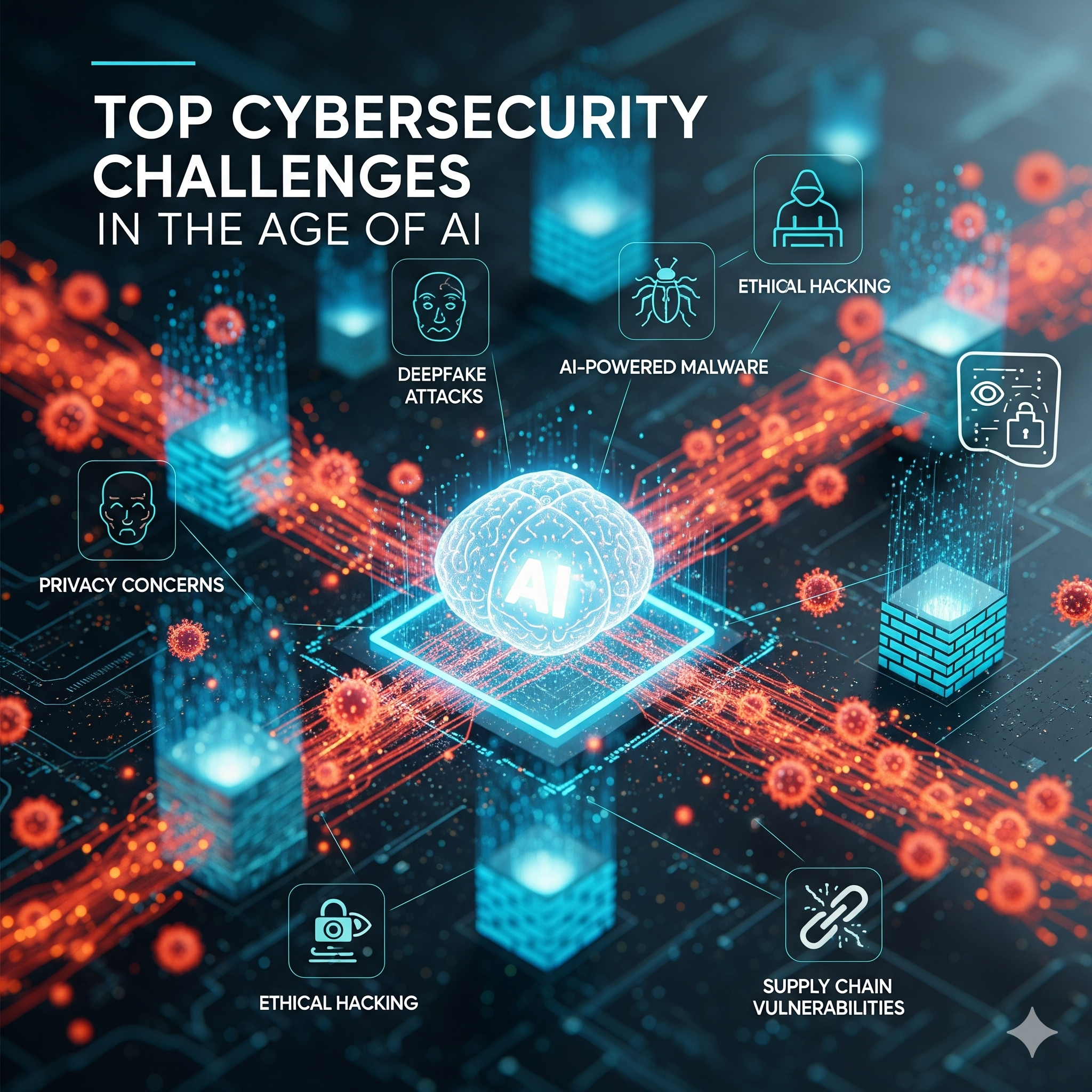
One of the biggest threats is the rise of AI-driven cyberattacks. Hackers now use AI to automate phishing campaigns, bypass security protocols, and identify system vulnerabilities faster than traditional methods. These attacks are harder to detect and can cause significant damage before organizations even realize they’ve been compromised.
Data Privacy Concerns
AI systems rely heavily on data to function effectively, making data privacy a major concern. With vast amounts of personal and organizational information being collected, the risk of misuse or unauthorized access increases. Companies must ensure compliance with regulations like GDPR while implementing strong encryption and access controls to safeguard sensitive information.
Deepfakes and Misinformation
Deepfake technology is another AI-driven challenge. Cybercriminals can manipulate images, videos, and voices to impersonate individuals, spread misinformation, or conduct fraud. In sectors like finance, healthcare, and politics, the misuse of deepfakes poses serious risks to trust and security. Detecting and countering such AI-generated content is becoming a priority for cybersecurity teams.
Adversarial Attacks on AI Models
AI systems themselves are vulnerable to adversarial attacks, where malicious actors feed manipulated data into AI models to make them behave incorrectly. For example, an attacker could alter data to misguide fraud detection systems or self-driving car algorithms. Securing AI models against such attacks is a growing challenge for developers and security experts.
Skill Gaps in Cybersecurity
The rapid adoption of AI in cybersecurity has created a demand for skilled professionals who can understand both AI and security. Unfortunately, the shortage of experts creates vulnerabilities, as organizations struggle to implement and monitor AI-powered systems effectively. Investing in training and workforce development is critical to closing this gap.
Balancing AI for Defense and Offense
While AI strengthens security with real-time threat detection, it also provides cybercriminals with powerful tools. Striking the right balance between using AI for protection and defending against AI-powered threats is a key challenge. Businesses must adopt proactive security measures, continuous monitoring, and advanced defense systems to stay ahead.
Final Thoughts
The age of AI brings both opportunities and challenges for cybersecurity. From AI-powered attacks and data privacy concerns to deepfakes and adversarial threats, organizations must remain vigilant. By combining robust security strategies, compliance practices, and skilled professionals, businesses can overcome these challenges and harness AI safely. Cybersecurity in the AI era is not just about technology—it’s about building trust and resilience in the digital world.


